Ancient boxing had fewer rules than the modern sport. Boxers fought without rounds until one man was knocked out, or admitted he had been beaten. Unlike the modern sport, there was no rule against hitting an opponent when he was down.
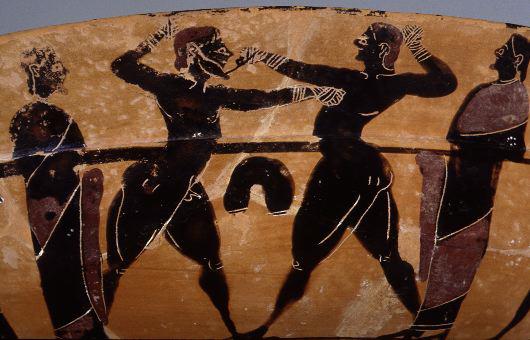
Pankration:
This event was a grueling combination of boxing and wrestling. Punches were allowed, although the fighters did not wrap their hands with the boxing himantes. Rules outlawed only biting and gouging an opponent's eyes, nose, or mouth with fingernails. Attacks such as kicking an opponent in the belly, which are against the rules in modern sports, were perfectly legal.

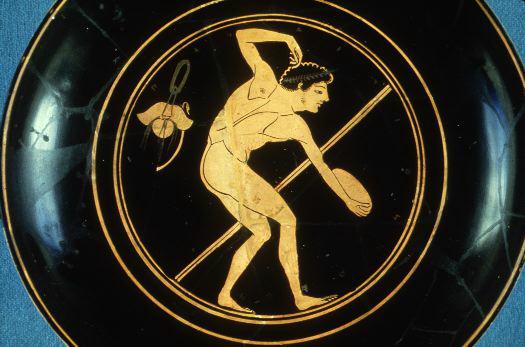
Discus:The ancient Greeks considered the rhythm and precision of an athlete throwing the discus as important as his strength. The discus was made of stone, iron, bronze, or lead, and was shaped like a flying saucer. Sizes varied, since the boys' division was not expected to throw the same weight as the mens'.
 Jump:Athletes used lead or stone jump weights (halteres) shaped like telephone
receivers to increase the length of their jump. The halteres were held in
front of the athlete during his ascent, and forcibly thrust behind his back and
dropped during his descent to help propel his body further.
Jump:Athletes used lead or stone jump weights (halteres) shaped like telephone
receivers to increase the length of their jump. The halteres were held in
front of the athlete during his ascent, and forcibly thrust behind his back and
dropped during his descent to help propel his body further.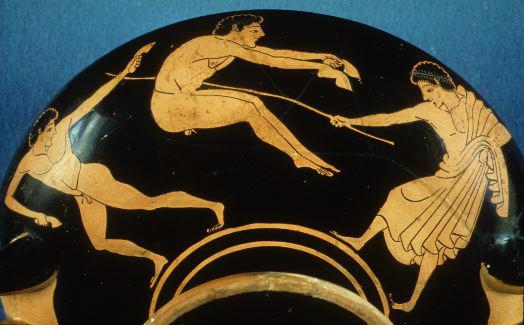 Wrestling:Like the modern sport, an athlete needed to throw his opponent on the ground,
landing on a hip, shoulder, or back for a fair fall. 3 throws were necessary to
win a match. Biting was not allowed, and genital holds were also illegal.
Attacks such as breaking your opponent's fingers were permitted.
Wrestling:Like the modern sport, an athlete needed to throw his opponent on the ground,
landing on a hip, shoulder, or back for a fair fall. 3 throws were necessary to
win a match. Biting was not allowed, and genital holds were also illegal.
Attacks such as breaking your opponent's fingers were permitted. 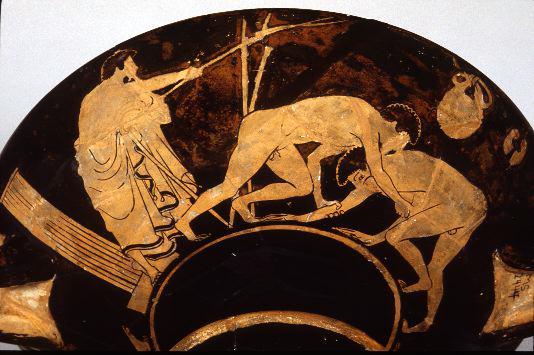 If you were an athlete in the Ancient Olympics, which event do you think would you excel in or become a winner? Why would the event suit you? Or would you be a spectator?